

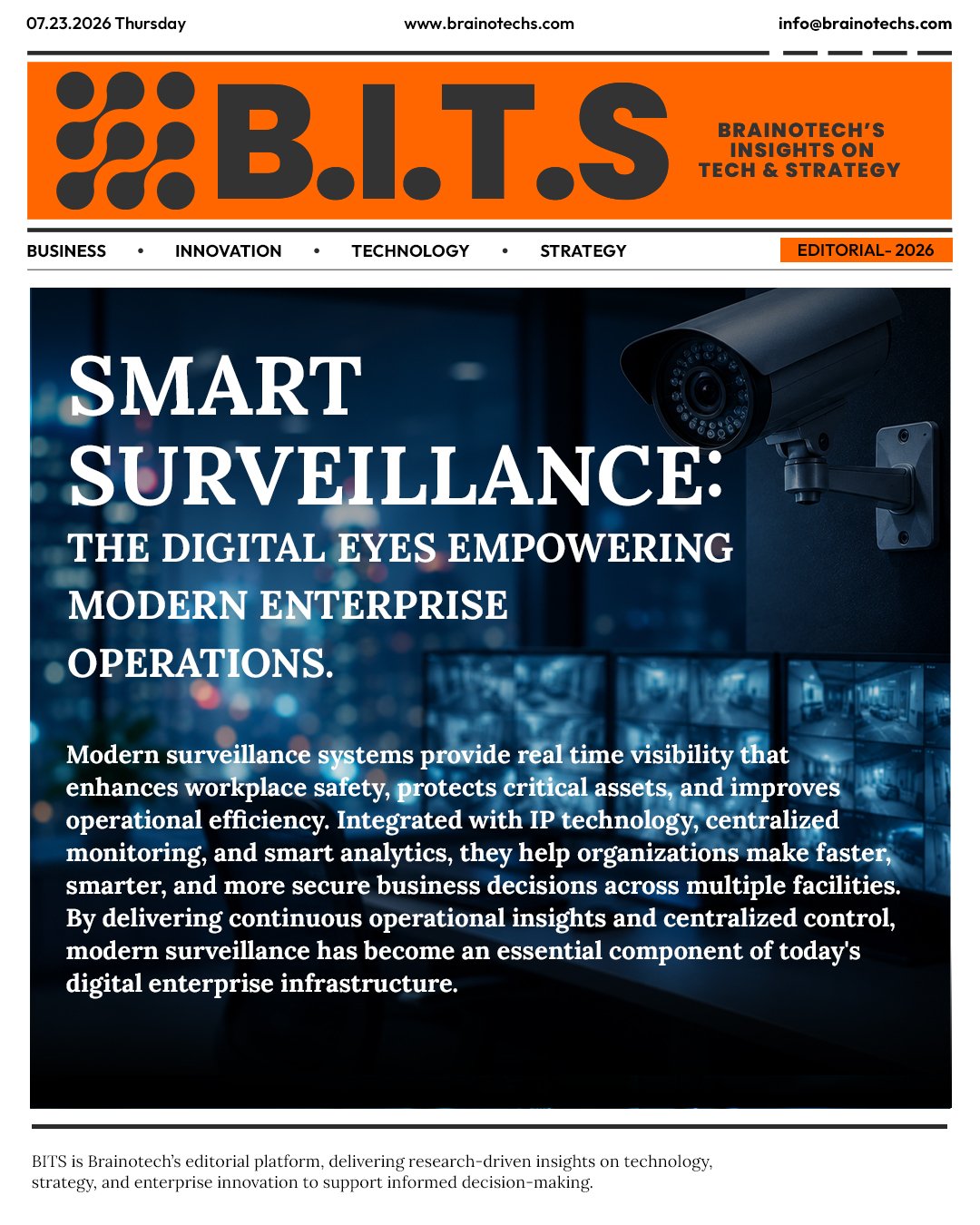
When organizations discuss digital transformation, the conversation often revolves around cloud computing, cybersecurity, enterprise networking, and data centers. While these technologies are essential, one critical component is often overlooked—the surveillance system. Modern surveillance is no longer limited to recording video for security purposes. It has evolved into an intelligent operational tool that provides organizations with real-time visibility, improves workplace safety, supports compliance, and enhances overall business efficiency.
Today, organizations across industries are investing heavily in IP-based surveillance infrastructure as part of their digital modernization strategies. According to industry research, the global video surveillance market is expected to exceed USD 100 billion by 2030, driven by increasing demand for smart cities, enterprise security, industrial automation, critical infrastructure protection, and intelligent building management. As businesses continue expanding across multiple locations, centralized surveillance has become a fundamental component of operational resilience and business continuity.
Every day, thousands of organizations rely on surveillance systems to monitor facilities, protect valuable assets, and oversee business operations. Whether it is a manufacturing plant monitoring production lines, a university ensuring campus safety, a hospital protecting patients and medical equipment, or a logistics company managing warehouse operations, surveillance systems provide continuous visibility that enables organizations to make faster and better-informed decisions.
The evolution of surveillance technology has been remarkable. Early CCTV systems relied on analog cameras connected to local recording devices with limited image quality and almost no remote accessibility. While these systems provided basic security, they required significant manual monitoring and offered little operational value beyond incident investigation. The introduction of Internet Protocol (IP) cameras transformed the industry by enabling high-definition video, centralized management, remote access, intelligent recording, and seamless integration with enterprise networks.
Today, modern surveillance solutions incorporate high-resolution cameras, Network Video Recorders (NVRs), centralized management software, cloud connectivity, mobile access, and enterprise storage systems. Organizations can monitor multiple facilities from a single control room while securely accessing live video and recorded footage from virtually anywhere. This centralized approach reduces response times, improves operational oversight, and enables better coordination across distributed business locations.
Modern Enterprise Surveillance Components
| Component | Primary Function | Business Benefit |
| IP Cameras | High-definition video monitoring | Real-time operational visibility |
| Network Video Recorder (NVR) | Video recording and storage | Secure centralized evidence management |
| Enterprise Network | Connects surveillance infrastructure | Reliable data transmission |
| Central Monitoring Station | Live monitoring and system management | Faster incident response |
| Storage Systems | Long-term video retention | Regulatory compliance and investigations |
| Remote Monitoring Platform | Secure remote system access | Multi-site operational management |
Throughout an organization, surveillance systems contribute far beyond physical security. Operations managers can monitor production efficiency, verify adherence to workplace procedures, oversee visitor movement, and ensure compliance with safety regulations without being physically present. This level of visibility allows organizations to identify operational bottlenecks, improve resource allocation, and maintain consistent operational standards across multiple facilities.
In manufacturing environments, surveillance helps monitor production processes, equipment utilization, and employee safety. Retail businesses use surveillance to understand customer movement, reduce inventory losses, and improve service quality. Educational institutions benefit from enhanced campus security and improved emergency response capabilities, while healthcare facilities utilize surveillance to safeguard patients, monitor restricted areas, and protect critical medical equipment. Warehouses and logistics centers rely on surveillance to oversee inventory movement, loading operations, and distribution efficiency.
One of the greatest advantages of modern surveillance infrastructure is its ability to integrate with other enterprise technologies. Today’s surveillance systems work alongside access control solutions, structured cabling, enterprise networking, storage infrastructure, and centralized security platforms to create a unified operational environment. Instead of functioning as isolated security systems, surveillance platforms become part of a comprehensive enterprise infrastructure that supports both security and operational management.
Although surveillance technology has become increasingly sophisticated, its effectiveness still depends on the quality of the underlying infrastructure. High-definition cameras generate significant amounts of data that must be transmitted reliably across enterprise networks and securely stored for future access. Proper structured cabling, network switching, storage architecture, and system design remain essential to ensure uninterrupted surveillance performance. Poor infrastructure planning can result in degraded video quality, recording failures, network congestion, and operational downtime.
Business Advantages of Modern Surveillance
| Operational Area | Impact |
| Workplace Safety | Continuous monitoring of safety compliance |
| Asset Protection | Reduced theft, vandalism, and unauthorized access |
| Operational Visibility | Real-time monitoring across multiple facilities |
| Incident Response | Faster identification and resolution of security events |
| Compliance | Improved documentation and regulatory support |
| Business Continuity | Reliable monitoring of mission-critical operations |
Organizations are also recognizing surveillance as a valuable source of operational intelligence. Rather than reviewing footage only after an incident occurs, management teams increasingly use surveillance data to evaluate workflows, optimize facility layouts, monitor occupancy levels, and improve overall operational efficiency. This proactive approach transforms surveillance from a reactive security measure into a strategic business management tool.
Interesting Industry Facts
- The global video surveillance market is projected to exceed USD 100 billion by 2030 as organizations continue investing in intelligent security infrastructure.
- Modern enterprise IP cameras can capture video in resolutions exceeding 4K Ultra HD, providing exceptional image clarity for monitoring and investigations.
- Large corporate campuses, airports, hospitals, and industrial facilities often operate thousands of network-connected surveillance cameras managed from a centralized control room.
- IP surveillance systems can integrate seamlessly with access control, fire detection, visitor management, and building management systems.
- Continuous surveillance helps organizations improve workplace safety, protect critical assets, and strengthen operational resilience.
- Properly designed surveillance infrastructure can remain operational for more than a decade with regular maintenance and technology upgrades.
At Brainotech, we understand that modern surveillance is about much more than security cameras. Our engineering teams design and deploy enterprise-grade surveillance solutions that integrate seamlessly with structured cabling, enterprise networking, storage infrastructure, centralized monitoring platforms, and access control systems. Our services include IP-based CCTV deployment, Network Video Recorders (NVRs), centralized monitoring solutions, surveillance network infrastructure, structured cabling, enterprise switching, storage solutions, system integration, testing, commissioning, and ongoing technical support.
As organizations continue embracing digital transformation, surveillance systems will play an increasingly important role in supporting operational excellence. They provide the visibility required to improve efficiency, protect valuable assets, strengthen workplace safety, and enable informed business decisions. Modern surveillance is no longer simply about watching events unfold—it is about creating smarter, safer, and more resilient organizations where technology supports every aspect of daily operations.
