

Cybersecurity in Europe is no longer a background technical function quietly handled by IT teams; it has become a central concern in boardroom conversations where risk, resilience, and long term value are debated side by side. Over the past few years, organizations across Europe have witnessed a sharp escalation in cyber threats, with ransomware attacks alone increasing by more than 30 percent year on year in several EU states. This shift has forced leadership to reframe cybersecurity not as a cost burden, but as a strategic investment that protects operations, reputation, and market position in an increasingly volatile digital economy.
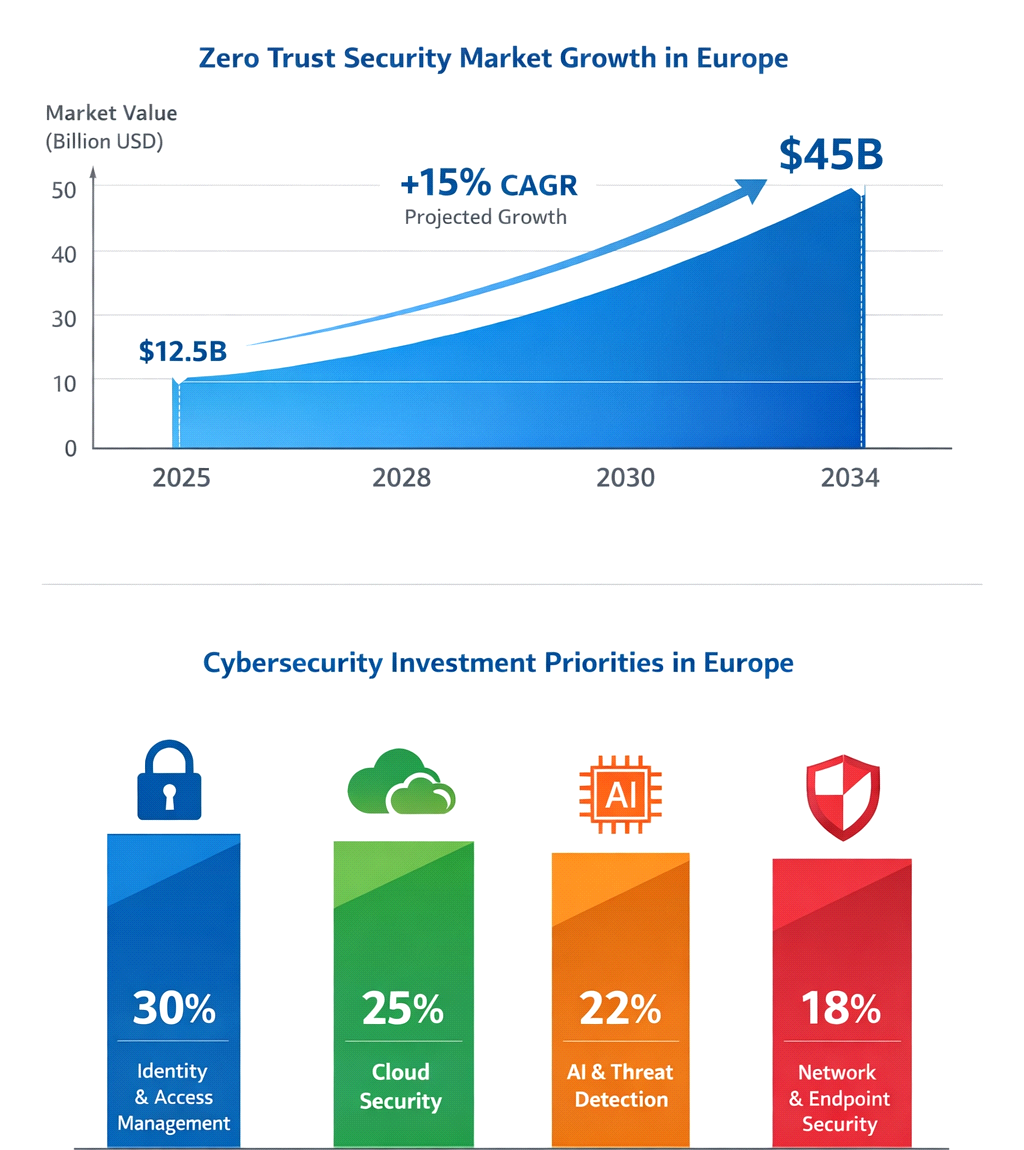
At the same time, the financial scale of cybersecurity investment reflects this urgency. The European zero trust security market, valued at approximately 12.5 billion dollars in 2025, is projected to grow to over 45 billion dollars by 2034, indicating a sustained compound growth rate of over 15 percent. This is not isolated growth. Across the broader cybersecurity sector, spending is rising steadily as enterprises respond to increasing attack surfaces created by cloud adoption, hybrid workforces, and interconnected digital systems.
What is particularly interesting from a governance perspective is that cybersecurity spending is no longer reactive. Boards are not waiting for incidents to occur before allocating funds. Instead, investment is increasingly proactive, focused on building resilience and ensuring business continuity. Studies suggest that over 70 percent of European organizations are increasing their cybersecurity budgets annually, with a strong emphasis on prevention, detection, and rapid recovery capabilities.
One of the most defining shifts within this investment landscape is the adoption of zero trust architecture. Unlike traditional security models that rely on a defined network perimeter, zero trust operates on continuous verification, ensuring that every user, device, and system interaction is authenticated. This approach is gaining rapid traction, particularly in sectors such as finance and healthcare where regulatory pressure is intense. However, implementing zero trust is not simply a technological upgrade; it requires organizational alignment, cultural change, and long term commitment from leadership.
Interestingly, the allocation of cybersecurity budgets is also becoming more refined. Identity and access management now accounts for nearly 30 percent of total cybersecurity investment in many European enterprises, reflecting the shift toward identity as the primary security perimeter. Cloud security and AI driven solutions follow closely, highlighting the growing importance of securing distributed and intelligent systems.
Another layer shaping cybersecurity investment is regulation. Europe’s regulatory environment is among the most advanced globally, with frameworks such as NIS2 and DORA pushing organizations toward higher standards of accountability and preparedness. Non compliance is no longer an option, with penalties reaching millions of euros and, more importantly, damaging institutional credibility. This has elevated cybersecurity discussions to the highest levels of corporate governance, where boards are now directly involved in overseeing risk frameworks and compliance strategies.
Artificial intelligence is simultaneously accelerating both the threat landscape and the defensive capabilities available to organizations. On one hand, attackers are using AI to automate phishing campaigns and create highly convincing deepfake content. On the other, enterprises are investing heavily in AI driven threat detection systems that can identify anomalies in real time and respond faster than traditional methods. Reports indicate that nearly 60 percent of European organizations are now integrating AI into their cybersecurity operations, yet a significant portion still lacks the internal expertise to fully secure these systems, creating a paradox where innovation outpaces protection.
Despite the surge in investment, several structural challenges persist. The shortage of skilled cybersecurity professionals remains one of the most pressing issues, with Europe facing a talent gap of hundreds of thousands of specialists. This shortage directly impacts the effectiveness of even well funded cybersecurity strategies. Additionally, legacy systems continue to create vulnerabilities, particularly in large institutions where outdated infrastructure cannot easily integrate with modern security frameworks.
What stands out in this evolving landscape is the shift in mindset at the board level. Cybersecurity is no longer viewed purely through the lens of risk avoidance; it is increasingly seen as a driver of trust and competitive advantage. Organizations that demonstrate strong cybersecurity practices are better positioned to attract customers, secure partnerships, and operate confidently in digital markets. In this sense, cybersecurity becomes not just a defensive mechanism but a strategic enabler of growth.
Looking forward, the trajectory of cybersecurity investment in Europe suggests continued expansion, deeper integration with business strategy, and greater emphasis on resilience. Public sector funding, combined with private sector innovation, is likely to further accelerate this trend. However, the real differentiator will not be how much organizations spend, but how effectively they align their investments with evolving threats, regulatory demands, and business objectives.
For board members and CISOs, the challenge is clear. Cybersecurity must be approached holistically, balancing technology, governance, and human capital. It requires continuous attention, informed decision making, and a willingness to adapt to a rapidly changing environment. Those who succeed will not only protect their organizations from disruption but will also position them to lead in an increasingly secure and trusted digital economy
