

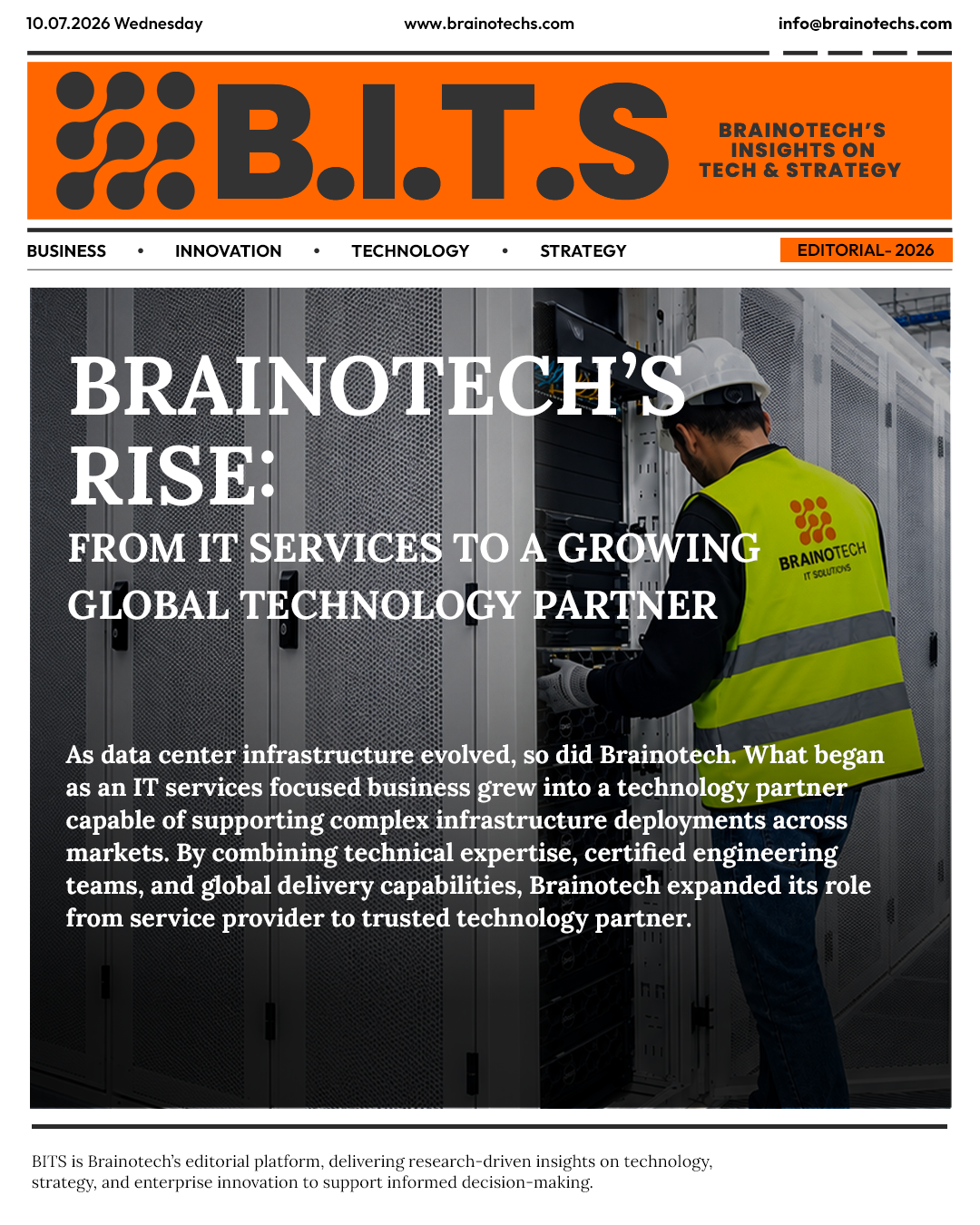
Brainotech IT Solutions is steadily evolving from an IT services provider into a broader global technology partner, expanding its capabilities across managed IT services, field operations, network infrastructure, wireless technology, audiovisual integration, workplace systems, enterprise devices, IT depot operations and smart hands support.
The company’s development reflects a broader transformation taking place across the global technology industry. Organisations are increasingly moving beyond traditional IT support models and looking for technology partners capable of supporting the complete infrastructure environment—from networks and devices to physical installations, workplace technology and ongoing operational support.
Brainotech’s growth has followed this changing demand. What began around technical services has developed into a wider delivery model capable of supporting complex technology environments across multiple locations and countries.
The traditional role of IT support is changing rapidly. Businesses no longer require technology partners only when a computer fails or a network experiences an outage. They increasingly need technical organisations that can understand infrastructure, coordinate deployments, provide engineers on site, manage equipment, modernise networks and maintain technology throughout its operational lifecycle.
Brainotech has expanded its capabilities in response to this requirement, developing services covering managed IT, enterprise infrastructure, field engineering, network modernisation, wireless systems, smart hands, IT depot operations, workplace technology and audiovisual integration.
Its project portfolio demonstrates the scale of this development. Brainotech has supported network-modernisation programmes extending across 15 countries, involving the replacement of more than 1,000 wireless access points and approximately 250 network switches. Such deployments require significantly more than equipment installation. They involve planning, equipment preparation, logistics, engineering coordination, cabling, quality assurance, configuration, testing and post-deployment validation.
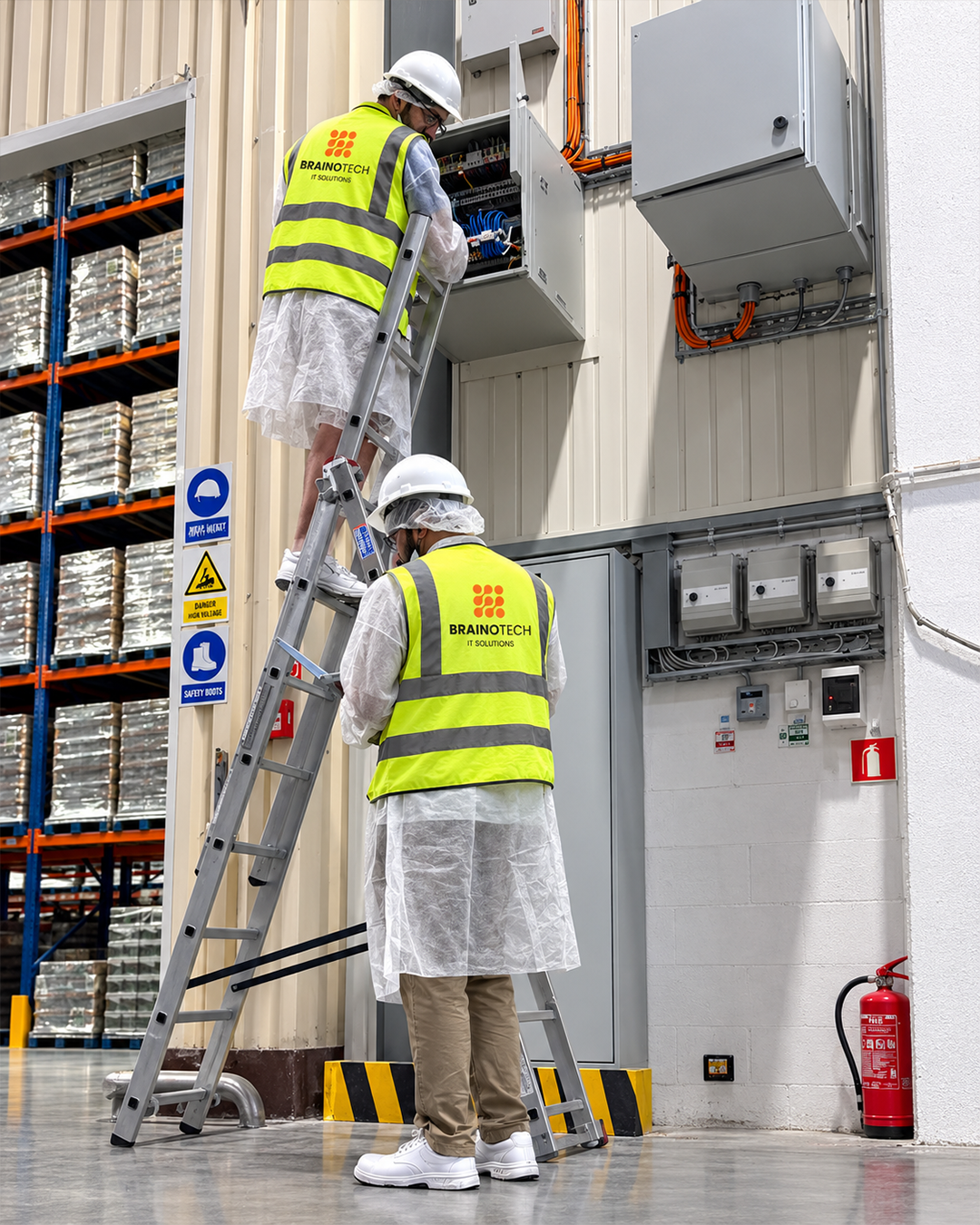
The ability to coordinate these activities across multiple locations has become increasingly important as organisations operate geographically distributed technology environments. A network upgrade that affects offices, industrial facilities or other operational sites cannot simply be treated as a conventional installation. It requires careful scheduling, technical consistency and strong communication between remote teams and engineers working physically at each location.
Brainotech’s infrastructure work has also extended into large-scale data-centre and office environments. In one multi-country programme, the company supported the installation of more than 50 network racks, over 5,500 cables and more than 300 network and infrastructure devices. The work included equipment installation, inventory management, asset tracking, connectivity testing, quality assurance and technical documentation.
Such projects highlight the importance of the physical infrastructure supporting modern digital businesses. While cloud computing and remote management have transformed the way organisations operate, the underlying physical environment remains critical. Racks, switches, cabling, access points, devices and other infrastructure still need to be installed, tested, documented and maintained.
Network modernisation has consequently become an increasingly important part of Brainotech’s service portfolio. Modern networks must provide reliability, security, scalability and sufficient performance for cloud applications, collaboration platforms, wireless devices, security systems and other connected technologies. Brainotech’s work in wireless infrastructure includes network assessments, Wi-Fi surveys, coverage analysis, infrastructure documentation, access-point deployment, network-rack support, structured cabling and performance optimisation.
The company’s experience includes wireless assessments across several countries and large industrial environments. Some of these projects have involved facilities covering hundreds of thousands of square metres, with detailed assessments of network racks, cabling and wireless coverage across extensive operational areas. Wireless surveys involving hundreds of access points have also formed part of these engagements.
These assignments demonstrate that wireless infrastructure has become a strategic component of modern enterprise operations. In manufacturing, logistics, offices, retail environments and other large facilities, wireless connectivity increasingly supports everything from employee devices and communications to operational systems and connected equipment.
Brainotech has also developed substantial field-engineering capabilities to complement its remote IT services. Although many technology services can now be managed remotely, physical infrastructure still requires people on the ground. Servers need to be installed. Network equipment needs to be replaced. Access points need to be mounted. Cables need to be traced and tested. Devices need to be deployed. Equipment needs to be moved between locations.
Brainotech’s field operations and smart hands services provide this physical layer of support, allowing organisations to extend their technical teams into locations where they may not have permanent personnel.
This model is particularly relevant for organisations operating across multiple cities or countries. Rather than maintaining a dedicated technical team at every location, organisations can use specialised field resources to execute defined technical tasks while their central IT teams retain control of architecture, security and operational management. Brainotech’s IT depot capabilities further strengthen this model. An IT depot can act as a central operational point for receiving, preparing, configuring, testing, storing and dispatching technology equipment.
The company has supported large-scale depot and field operations involving multiple sites, hardware receiving and dispatch, device preparation, operating-system imaging, equipment evaluation, inventory audits, warranty coordination, secure equipment disposal, network support, cable tracing and infrastructure testing.
This creates a more structured approach to technology lifecycle management. Instead of treating every device deployment or replacement as an individual incident, organisations can establish repeatable processes covering procurement, preparation, deployment, maintenance, replacement and retirement.
Brainotech’s experience also extends into workplace technology.
Modern offices increasingly depend on audiovisual systems for meetings, collaboration, presentations, training and communication. Displays, conferencing equipment, microphones, speakers, wireless presentation systems, room-control systems and network infrastructure now need to operate as part of a unified workplace environment. Brainotech’s AV integration capability reflects this convergence between IT and workplace technology. Its project experience includes meeting-room technology, displays, conferencing systems, room-control equipment, audio systems and associated network infrastructure, with technical teams responsible for installation, troubleshooting, testing and operational validation.
The company has also supported large workplace technology refresh programmes involving hundreds of displays and other workplace devices. These deployments have required logistics coordination, inventory management, removal of legacy equipment, installation of new technology and post-installation quality checks.
The significance of this work goes beyond replacing equipment. Modern workplace technology must be reliable from the moment employees enter a meeting room or connect to the corporate network. A failed display, conference system or network connection can directly affect productivity, collaboration and business operations.
Brainotech’s portfolio also demonstrates experience supporting technology environments in retail and other distributed operational settings.
Field teams have supported technology across hundreds of locations, carrying out network troubleshooting, operating-system upgrades, point-of-sale technology support, device deployment, communications infrastructure work and technical maintenance.
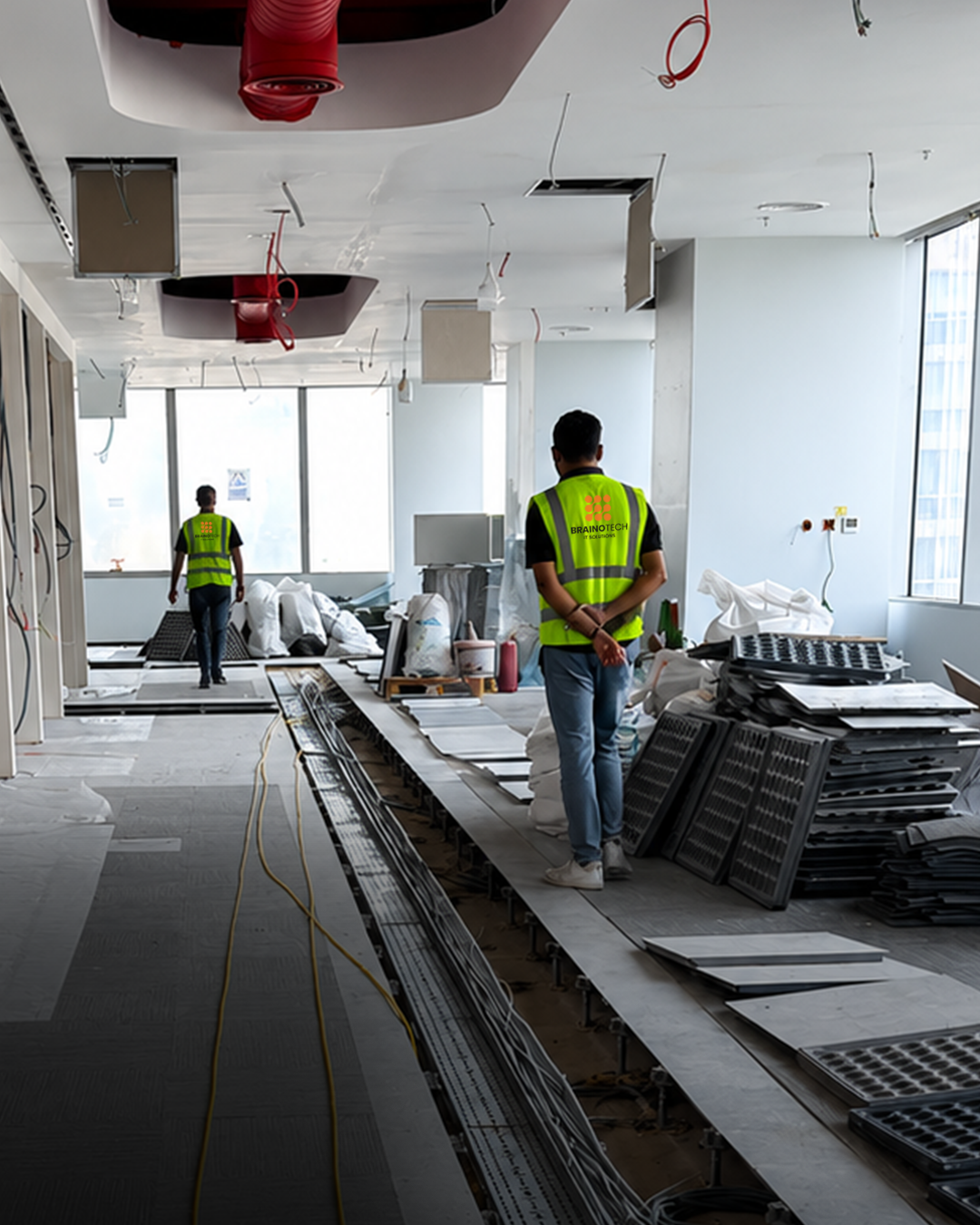
In other deployments, Brainotech has supported the complete technology fit-out of new and refurbished locations, incorporating network infrastructure, connectivity, computing devices, payment systems, digital displays, communications technology and other operational equipment.
These environments require a different type of technical support because technology failures can directly affect day-to-day business operations. Field engineers therefore need to work within strict deployment schedules, coordinate with local teams and validate systems before a location becomes operational.
Brainotech has also undertaken large-scale network deployment programmes involving teams of engineers working across multiple sites and shifts. One such programme involved more than 800 wireless access points and approximately 150 network switches, with engineers responsible for pre-staging, rack-and-stack activities, cabling, access-point installation, migration support, troubleshooting and post-deployment checks.
Such projects demonstrate the importance of operational coordination alongside technical expertise. At scale, successful technology deployment depends not only on engineers but also on logistics, documentation, project management, quality assurance and communication between central and local teams.
Another area of Brainotech’s work involves critical infrastructure monitoring and remote technical environments. Its teams have supported the deployment and commissioning of monitoring systems, network infrastructure and secure remote-access technologies across multiple international locations.
These projects demonstrate the increasingly important relationship between remote management and physical infrastructure. Organisations may monitor systems centrally, but deployment, commissioning, troubleshooting and physical intervention still require experienced technical personnel at the site.
The convergence of these capabilities is perhaps the most important aspect of Brainotech’s development.
Managed IT services connect with field operations. Field operations connect with network infrastructure. Networks connect with wireless systems. Wireless systems connect with workplace technology. Workplace technology connects with audiovisual systems. Enterprise devices connect with logistics and lifecycle management.

Together, these capabilities form a broader technology ecosystem.
This ecosystem is increasingly important because modern organisations rarely experience technology as a collection of isolated systems. Employees expect networks, devices, conferencing platforms, displays, applications and communications systems to work together seamlessly.
For technology partners, this creates a new responsibility: not simply delivering individual services, but understanding how different parts of an organisation’s technology environment interact.
Brainotech’s expanding portfolio reflects this shift.
The company is increasingly positioned around the idea of long-term technology support rather than one-off implementation. A network may be modernised once, but it must continue to be monitored and maintained. Devices may be deployed once, but they require lifecycle management. An audiovisual environment may be installed once, but users will continue to require technical support. Infrastructure may be upgraded, but business requirements will continue to change.
This makes continuity increasingly important.
For multinational organisations, the ability to access consistent technical support across different countries can also reduce operational complexity. Standardised processes, documentation, technical procedures and service-level expectations can help organisations maintain greater consistency even when infrastructure is geographically dispersed.
Brainotech’s international field-engineering model is built around this requirement, combining remote technical expertise with physical resources capable of executing work at client locations. The company’s case studies demonstrate that this model can operate at significant scale, from network upgrades involving thousands of devices and extensive cabling to individual site interventions requiring specialised technical expertise.
Looking ahead, the technology environment is likely to become even more complex.
Artificial intelligence, automation, edge computing, cybersecurity, connected devices, intelligent workplaces and increasingly distributed infrastructure are changing the technical requirements of modern organisations.
These technologies create opportunities, but they also increase the need for reliable infrastructure and skilled technical execution.
Artificial intelligence, for example, may transform enterprise operations, but AI systems still depend on computing infrastructure, networks, storage, security and physical environments. Edge computing may move processing closer to users and devices, but those environments still require installation, monitoring and maintenance. Intelligent workplaces may improve collaboration, but their effectiveness depends on the integration of networks, audiovisual systems, devices and software.
For Brainotech, this creates an opportunity to continue expanding from individual technology services towards a more connected enterprise technology model.
Its development so far represents a gradual progression, from solving individual technology problems to supporting the infrastructure that enables organisations to operate.
The company’s growing capabilities across managed IT, field operations, network modernisation, wireless infrastructure, enterprise devices, IT depot services, smart hands and audiovisual integration demonstrate how the boundaries of enterprise technology are changing.
The next stage is unlikely to be defined simply by becoming larger. It will increasingly be about becoming more capable, more connected and more intelligent in how technology is delivered.
Brainotech’s story is therefore not simply the story of an IT services company expanding its portfolio. It is part of a larger transformation in the technology industry—one in which organisations increasingly require partners capable of connecting digital systems with physical infrastructure, remote expertise with on-site execution, and individual technology projects with long-term operational support.
What began with solving technology problems is developing into something broader: building, deploying and supporting the infrastructure that allows modern organisations to operate, connect, collaborate and grow.
Brainotech IT Solutions
Managed IT | Field Operations | Network Infrastructure | AV Systems Integration | Smart Hands | IT Depot Services
